The personal vault
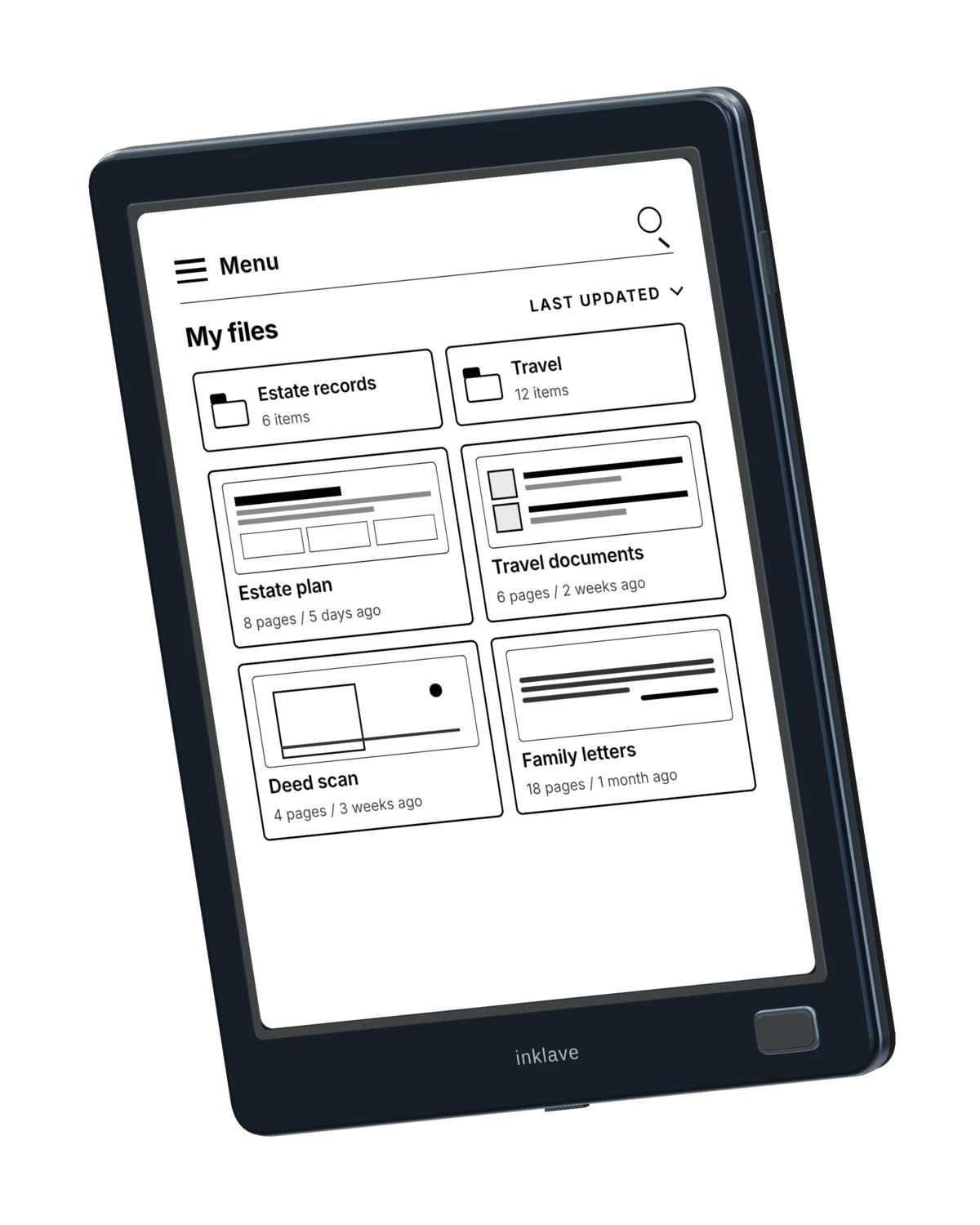
Inklave Tablet
A quiet E-Ink display. A powerful hardware foundation. Your most sensitive information, with no connection to the outside.
E-Ink displayBiometric accessAir-gapped
Explore the tablet From $599
Meet Inklave. An air-gapped E-Ink tablet and secure USB drive for the things that are yours alone.
No cloud. No connection. No compromise on privacy.
Your recovery phrase. Your family's records. The thoughts you keep to yourself. In a world that connects everything, Inklave gives you something rare: a place that doesn't.
Meet our philosophyThe Inklave system
Purpose-built hardware. Considered down to the last detail. A complete system for keeping what matters, yours.
A quiet E-Ink display. A powerful hardware foundation. Your most sensitive information, with no connection to the outside.
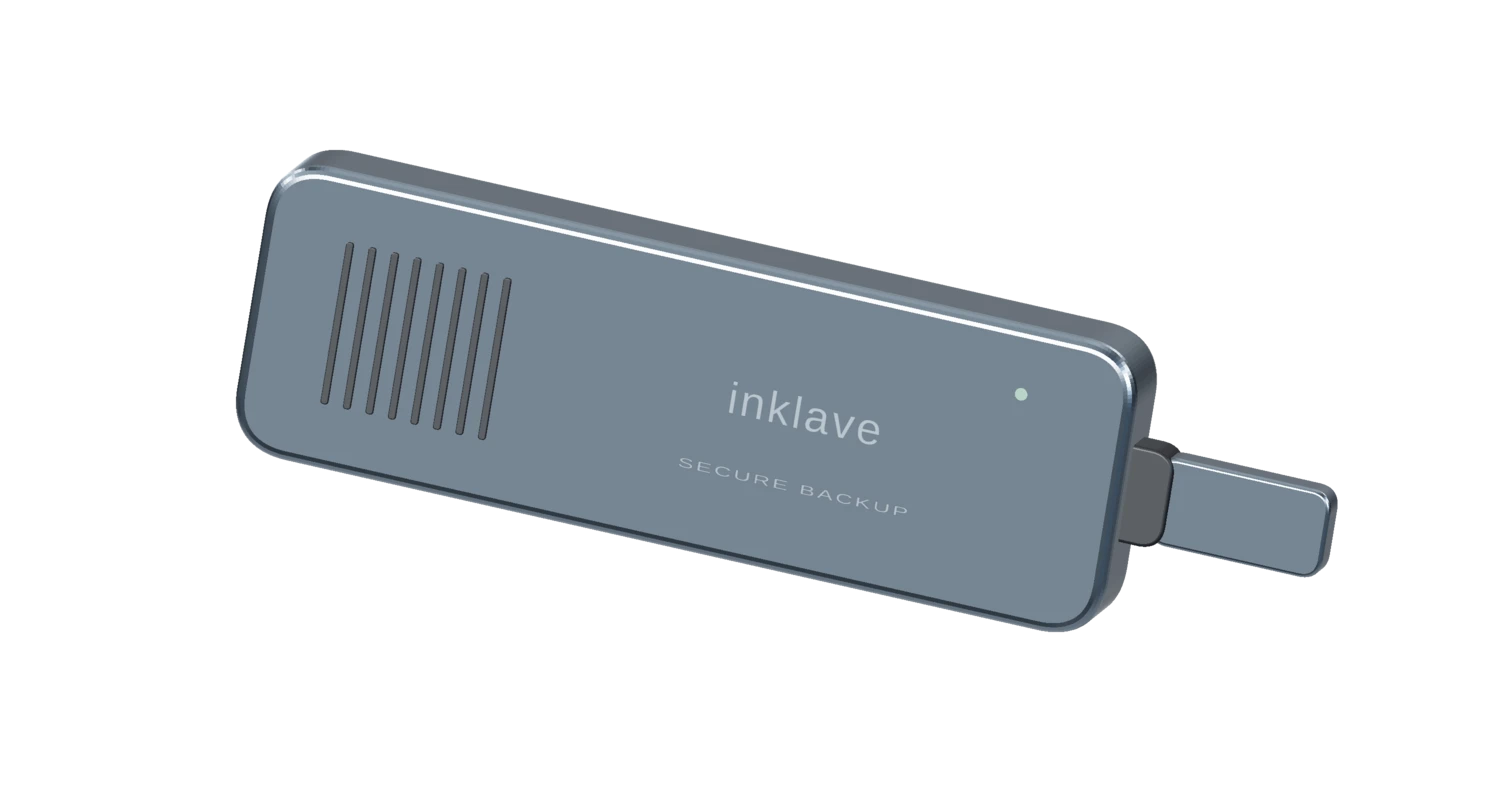
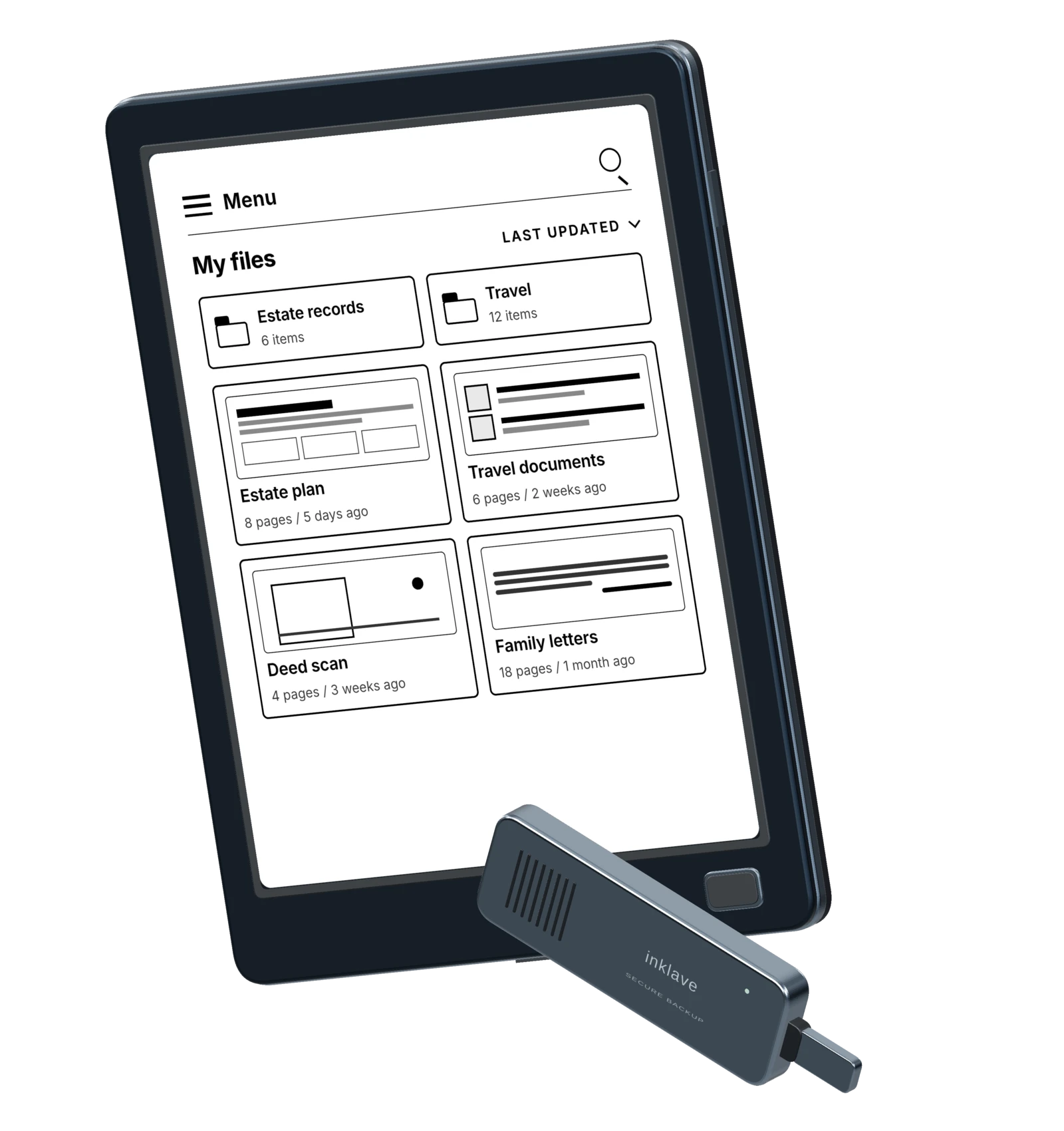
Encrypted storage. Dedicated secure hardware. The perfect partner for your personal vault.
Your tablet is the vault. Your USB is the backup. Neither needs the cloud.
Find your configurationThe architecture of trust
Five layers. One intention: keep your private world private, from the outside in.
No Wi-Fi, Bluetooth, cellular, or NFC hardware. Not switched off. Not installed. Your vault stays outside the connected world.
No wireless hardwareYour fingerprint is verified inside the Trusted Execution Environment. Access is rooted in the hardware, not a password on a login screen.
Hardware-verified identityLUKS2 full-disk encryption and a NIST-standardized post-quantum layer protect stored secrets. Publicly vetted standards, never proprietary cryptography.
LUKS2 + NIST-standardized PQCSensitive operations run inside OP-TEE's isolated secure world, separated from the normal operating system and its memory.
Isolated secure processingA dedicated, tamper-resistant Secure Element generates and safeguards master keys. The foundation beneath every other layer of protection.
Keys protected in siliconA space that's only yours
Keep a recovery record. Organize your documents. Make room for an idea. Explore three sides of a quieter, offline world.
Identity documents, estate records, and travel papers you cannot afford to lose. A private archive with no cloud provider in the middle.
Your library / Folders and document previews Interface concept based on Inklave OS. Work in progress.
A paper-like E-Ink display. No backlight, no distractions. Just you and what matters.
Fingerprint access, verified in trusted hardware. Your private space starts with you.
Decoy access and key-wipe capabilities add options for situations beyond a stolen password.
The Inklave tablet has no Wi-Fi, Bluetooth, cellular, or NFC hardware. It cannot connect to a wireless network. Your stored information stays physically separated from the internet, rather than relying on a software setting to keep it offline.
The tablet is your offline vault and E-Ink interface. The Secure USB Drive is its companion for encrypted storage and backup, with its own secure hardware. You can choose the tablet on its own or a complete tablet and USB package.
No. Recovery phrases and private keys are just one use. Inklave is also a place for personal documents, private notes, family records, and other information you want to keep off connected devices.
The architecture combines LUKS2 full-disk encryption, NIST-standardized post-quantum cryptography, OP-TEE trusted execution, and a dedicated Secure Element. It uses established cryptographic standards, not custom algorithms.
Our team can help with availability, specifications, and existing orders. Visit the contact page or email info@inklave.com. You can also join the update list below for product news.
Product news, thoughtful updates, and a first look at what's next for Inklave.
Just the important things. No noise.